我们了解过协程的使用,通过launch和async创建协程,也知道协程是个挂起恢复的框架。我们可以简单理解它是一个线程调度框架,可以方便切换线程,但这只是它的一种使用方式,它最重要的是代码块的挂起与恢复。它不仅可以在线程之间进行挂起恢复来达到切换线程的目的,甚至可以在同一个线程中将一块块的代码块进行挂起与恢复。本文就是分析它是如何做到这一点的。
Continuation
我们从最简单的启动协程来看,即scope.launch启动的协程:
1
2
3
4
5
6
7
8
9
10
11
12
| public fun CoroutineScope.launch(
context: CoroutineContext = EmptyCoroutineContext,
start: CoroutineStart = CoroutineStart.DEFAULT,
block: suspend CoroutineScope.() -> Unit
): Job {
val newContext = newCoroutineContext(context)
val coroutine = if (start.isLazy)
LazyStandaloneCoroutine(newContext, block) else
StandaloneCoroutine(newContext, active = true)
coroutine.start(start, coroutine, block)
return coroutine
}
|
上面是启动的源码,可以看到launch的作用就是创建了一个StandaloneCoroutine,然后通过start方法进行启动。而它是协程的一个具体实例,我们继续追踪可以看到它是继承自AbstractCoroutine的。但最终它实现了很多的接口,我们并不知道谁才是协程的最顶层定义,因此继续往下看:
1
2
3
4
5
6
7
8
9
10
11
| public abstract class AbstractCoroutine<in T>(
parentContext: CoroutineContext,
initParentJob: Boolean,
active: Boolean
) : JobSupport(active), Job, Continuation<T>, CoroutineScope {
...
public fun <R> start(start: CoroutineStart, receiver: R, block: suspend R.() -> T) {
start(block, receiver, this)
}
}
|
即最终实现是直接调用了CoroutineStart的方法,该参数是在launch启动时传递进去的,它表示的是协程的启动时机,有多个枚举值。这里我们没有直接传递参数,而是使用的默认值CoroutineStart.DEFAULT,继续追踪进入:
1
2
3
4
5
6
7
8
9
10
11
12
13
14
15
16
17
18
19
20
21
22
23
24
25
26
27
28
29
| public enum class CoroutineStart {
...
public operator fun <R, T> invoke(block: suspend R.() -> T, receiver: R, completion: Continuation<T>): Unit =
when (this) {
DEFAULT -> block.startCoroutineCancellable(receiver, completion)
ATOMIC -> block.startCoroutine(receiver, completion)
UNDISPATCHED -> block.startCoroutineUndispatched(receiver, completion)
LAZY -> Unit
}
}
internal fun <R, T> (suspend (R) -> T).startCoroutineCancellable(
receiver: R, completion: Continuation<T>,
onCancellation: ((cause: Throwable) -> Unit)? = null
) =
runSafely(completion) {
createCoroutineUnintercepted(receiver, completion).intercepted().resumeCancellableWith(Result.success(Unit), onCancellation)
}
public fun <T> Continuation<T>.resumeCancellableWith(
result: Result<T>,
onCancellation: ((cause: Throwable) -> Unit)? = null
): Unit = when (this) {
is DispatchedContinuation -> resumeCancellableWith(result, onCancellation)
else -> resumeWith(result)
}
|
所以最终走到的是Continuation.resumeWith方法去启动的协程,从这里也能看到,协程的具体定义实际上就是Continuation接口,我们从这个接口文件中的注释也可以看到它就代表着协程。
1
2
3
4
5
6
| public interface Continuation<in T> {
public val context: CoroutineContext
public fun resumeWith(result: Result<T>)
}
|
它有一个参数以及一个方法,其中参数表示的是协程的上下文,前面文章协程上下文CoroutineContext我们看过其结构实体,其本身就可以代表一组上下文集合,通过Key进行区分。然后就是resumeWith方法,该方法启动该协程。也就是说,实际上我们启动协程就是先创建一个Continuation然后再通过resumeWith启动即可。
那么我们不用给定的启动协程的接口,像它这样通过suspend来启动协程如何:
1
2
3
4
5
6
7
8
9
10
11
12
13
14
15
16
17
| suspend {
log("协程体内容")
delay(100)
10
}.startCoroutine(object : Continuation<Int> {
override val context: CoroutineContext
get() = EmptyCoroutineContext
override fun resumeWith(result: Result<Int>) {
log("resumeWith ${result.getOrNull()}")
}
})
-------------
D 协程体内容
D resumeWith 10
|
suspend关键字
我们知道,协程所执行的代码块或者方法必须是被suspend修饰的,该关键字代表着可挂起,因此被修饰的方法或代码块才能在协程中执行。但是,Kotlin是运行在JVM上的,而JVM是没有该关键字的,所以在编译成字节码时,suspend发生了什么?
1
2
3
4
5
6
| private suspend fun other() {}
private final Object other(Continuation $completion) {
return Unit.INSTANCE;
}
|
这是一个普通的suspend函数,我们看到编译器在编译这个方法的时候,给他加了一个Continuation参数,并将返回值改成了Object。经过我们前面的分析知道,Continuation就是协程的本体,它调用suspend方法的时候将本身传入了。这里因为我们定义的suspend方法是一个空实现,因此实际的实现中并没有用到Continuation,但我们根据此可以猜到,它就类似一个回调。
当我们在一个协程中执行一些操作,然后调用某个可挂起函数时,就将本身Continuation传递给了那个可挂起函数,当那个函数执行完之后,通过continuation.resumeWith再回到原协程体中。我们重新定义一个可挂起函数,让它进行挂起操作:
1
2
3
4
5
| private suspend fun other() {
println("挂起前")
delay(100)
println("挂起后")
}
|
然后编译之后再反编成Java:
1
2
3
4
5
6
7
8
9
10
11
12
13
14
15
16
17
18
19
20
21
22
23
24
25
26
27
28
29
30
31
32
33
34
35
36
37
38
39
40
41
42
43
44
45
46
47
48
49
50
51
52
53
54
55
56
57
58
| private static final Object other(Continuation $completion) {
Continuation $continuation;
label20: {
if ($completion instanceof MainActivity$other$1) {
$continuation = (MainActivity$other$1)$completion;
if (($continuation.label & Integer.MIN_VALUE) != 0) {
$continuation.label -= Integer.MIN_VALUE;
break label20;
}
}
$continuation = new ContinuationImpl($completion) {
Object result;
int label;
@Nullable
public final Object invokeSuspend(@NotNull Object $result) {
this.result = $result;
this.label |= Integer.MIN_VALUE;
return MainActivityKt.other((Continuation)this);
}
};
}
Object $result = $continuation.result;
Object var4 = IntrinsicsKt.getCOROUTINE_SUSPENDED();
switch ($continuation.label) {
case 0:
ResultKt.throwOnFailure($result);
String var1 = "挂起前";
System.out.println(var1);
$continuation.label = 1;
if (DelayKt.delay(100L, $continuation) == var4) {
return var4;
}
break;
case 1:
ResultKt.throwOnFailure($result);
break;
default:
throw new IllegalStateException("call to 'resume' before 'invoke' with coroutine");
}
String var5 = "挂起后";
System.out.println(var5);
return Unit.INSTANCE;
}
|
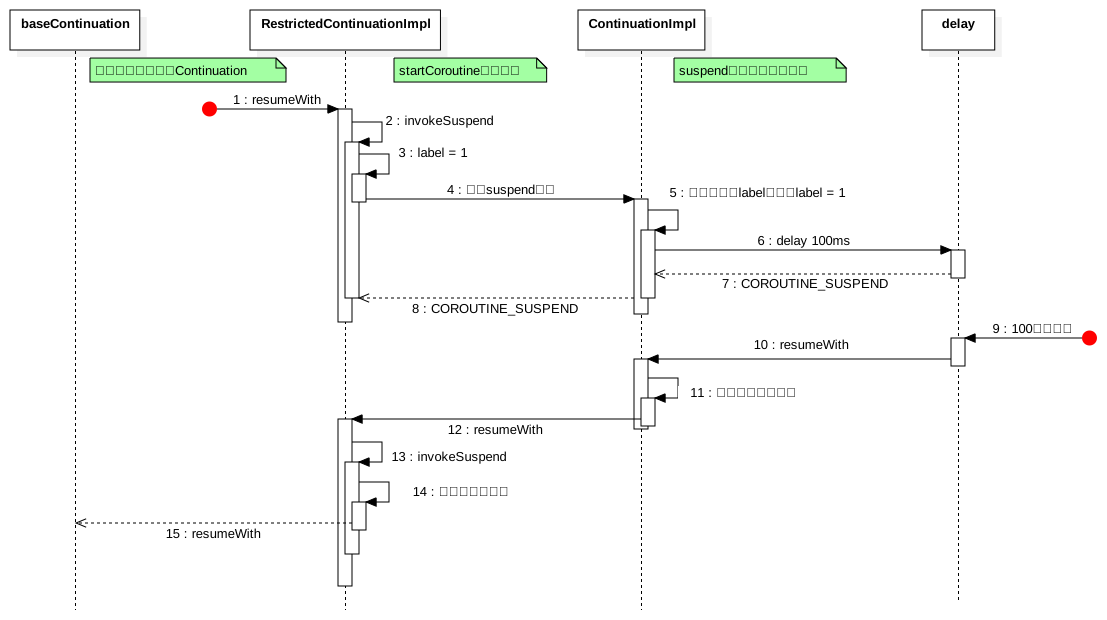
我们分析这段代码,可以看到协程的本质就是状态机+回调。这也是为什么suspend必须在协程代码块中执行,因为它需要一个Continuation参数,使用该参数回到原来的协程中。
因此,协程的启动必须从手动创建一个Continuation开始,然后这个初始Continuation开始调用某个suspend方法,然后将自身传入到这个suspend方法中。然后这个suspend如果内部有挂起点的话,就会把自己编译成一个内部类ContinuationImpl,然后按照挂起点将原本方法的代码分成多个块,每个块放在对应的switch语句中,通过label进行区分。
上面的代码我们看的是一个suspend方法,实际上suspend代码块编译后也是一样的。
初始启动
再次回到我们最开始的启动协程的代码块中,然后一路追踪它是如何开启协程的:
1
2
3
4
5
6
7
8
9
10
11
12
13
14
15
16
17
18
19
20
21
22
23
24
25
26
27
28
29
30
31
32
33
|
suspend {
...
}.startCoroutine(object : Continuation<Int> {
override val context: CoroutineContext
get() = EmptyCoroutineContext
override fun resumeWith(result: Result<Int>) {
log("resumeWith ${result.getOrNull()}")
}
})
public fun <T> (suspend () -> T).startCoroutine(
completion: Continuation<T>
) {
createCoroutineUnintercepted(completion).intercepted().resume(Unit)
}
public actual fun <T> (suspend () -> T).createCoroutineUnintercepted(
completion: Continuation<T>
): Continuation<Unit> {
val probeCompletion = probeCoroutineCreated(completion)
return if (this is BaseContinuationImpl)
create(probeCompletion)
else
createCoroutineFromSuspendFunction(probeCompletion) {
(this as Function1<Continuation<T>, Any?>).invoke(it)
}
}
|
最终是通过createCoroutineFromSuspendFunction方法创建协程的,该方法接收两个参数,第一个参数是probeCompletion也就是我们在startCoroutine是传入的一个匿名内部类;第二个参数是一个表达式,表达式中直接执行了this,也就是我们最开始的suspend代码块。
1
2
3
4
5
6
7
8
9
10
11
12
13
14
15
16
17
18
19
20
21
22
23
24
25
26
27
28
29
30
31
| private inline fun <T> createCoroutineFromSuspendFunction(
completion: Continuation<T>,
crossinline block: (Continuation<T>) -> Any?
): Continuation<Unit> {
val context = completion.context
return if (context === EmptyCoroutineContext)
object : RestrictedContinuationImpl(completion as Continuation<Any?>) {
private var label = 0
override fun invokeSuspend(result: Result<Any?>): Any? =
when (label) {
0 -> {
label = 1
result.getOrThrow()
block(this)
}
1 -> {
label = 2
result.getOrThrow()
}
else -> error("This coroutine had already completed")
}
}
else
...
}
|
在启动的协程中,我们又去创建了一个Continuation,然后它也是一个状态机,由它去调用suspend方法,最终走到了各种的回调中去。