Provider是Flutter中的一个状态管理框架,也算是入侵性非常小的一个状态管理库。这里说的入侵性小,指的是它并没有引入什么新的概念,完全就是基于Flutter内部一些功能所做的封装。
数据传递 状态管理的一个基础就是数据共享,而数据共享指的是多个子组件间可以共享状态,也就是进行状态提升。Provider用于提供状态的方式有很多,主要用于提供不同的状态类型,他们都是以Provider结尾的类。
例如下面通过Provider提供一个数据:
1
2
3
4
Provider<CircleController>(
例如上述代码,通过Provider提供一个CircleController对象,这样在它的子组件MyChildWidget,以及更深层级的子组件中都能够获取到CircleController,从而使用它内部的状态,或者说它本身也可以是一个状态。
实际上我们是知道在Flutter中,想向子组件传递数据,要么通过构造方法层层传入,要么构建一个独立于组件的对象来进行共享,要么就是通过InheritedWidget进行传递,Provider使用的就是最后一种方式。
1
2
3
4
5
6
7
8
9
10
11
12
13
14
15
16
17
18
19
20
21
22
class Provider <T > extends InheritedProvider <T > required Create<T> create,bool? lazy,super (null
在剔除掉一些静态方法后,可以看到Provider类实际上就是对InheritedProvider的一个包装,基本上没有做什么操作,再继续跟踪InheritedProvider:
1
2
3
4
5
6
7
8
9
10
11
12
13
14
15
16
17
18
19
20
21
22
23
24
25
26
27
28
29
30
31
32
33
34
35
36
37
38
39
40
41
42
43
44
45
46
47
48
49
50
51
52
53
54
55
class InheritedProvider <T > extends SingleChildStatelessWidget Function (BuildContext context, T? value)? update,void Function (T value)? debugCheckInvalidValueType,this .builder,bool? lazy,super (key: key, child: child);final _Delegate<T> _delegate;final bool? _lazy;final TransitionBuilder? builder;@override return _InheritedProviderElement<T>(this );@override return _InheritedProviderScope<T?>(this ,'$runtimeType ' : '' ,null
InheritedProvider在构造方法中提供了一系列的参数,参数实际上是在不同类型的Provider中使用的,这里先不去关注,因为它将这些参数统一打包在了一个代理对象中_CreateInheritedProvider,后续如果需要使用,就直接从代理对象中获取。
然后就是buildWithChild方法,这是构建布局的一个方法,在InheritedProvider中可以看到,它实际上调用的是构造方法传入的builder来完成布局的,并且在这个布局外面又套了一层_InheritedProviderScope。
1 2 3 4 5 6 7 8 9 10 11 12 13 14 15 16 17 18 19 20 21 22 23 24 25 26 27 class _InheritedProviderScope <T > extends InheritedWidget required this .owner,required this .debugType,required Widget child,assert (null is T),super (final InheritedProvider<T> owner;final String debugType;@override bool updateShouldNotify(InheritedWidget oldWidget) {return false ;@override return _InheritedProviderScopeElement<T>(this );
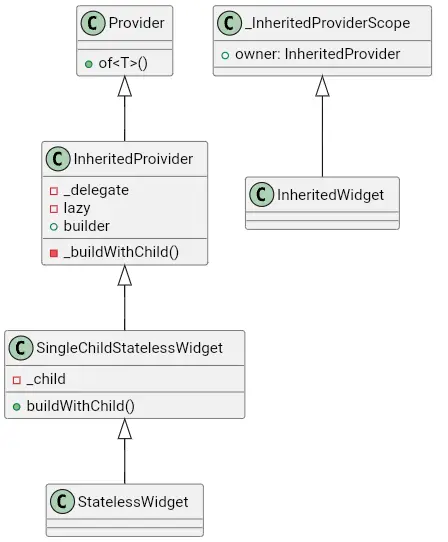
其中_InheritedProviderScope就是继承自InheritedWidget的,并且它持有了外部的InheritedProvider,也就是间接拿到了构造方法中传入的各种参数。注意在updateShouldNotify时,直接返回false。因此,但状态发生变化时,它是不会通知依赖的子组件进行更新的。
再回到最初的示例:
1
2
3
4
Provider<CircleController>(
此时组件树是如下所示的:
1 Provider -> _InheritedProviderScope -> MyChildWidget
其中_InheritedProviderScope是InheritedWidget类型,因此它的子组件就能通过context获取到_InheritedProviderScope,从而可以拿到它提供的状态。
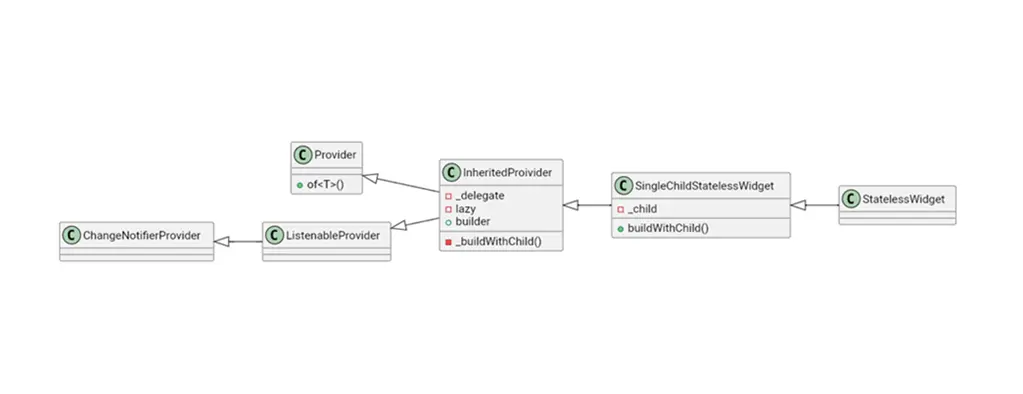
继承关系如下:
对于普通的Provider提供状态,我们看到了实际上就是包了一层InheritedWidget来提供状态,并且它提供的状态变化时,还不会通知到子组件进行重建,因此我们使用它来提供状态是非常有限的,我们常用的是ChangeNotifier,而它是继承自ListenableProvider。那把上面的例子替换成ListenableProvider:
1
2
3
4
ListenableProvider<CircleController>(
用法上和Provider是一致的,包括参数列表也是一样的:
1 2 3 4 5 6 7 8 9 10 11 12 13 14 15 16 17 18 19 20 21 22 23 24 25 26 27 28 29 30 31 32 class ListenableProvider <T extends Listenable ?> extends InheritedProvider <T > required Create<T> create,bool? lazy,super (static VoidCallback _startListening(return () => value?.removeListener(e.markNeedsNotifyDependents);
ListenableProvider也是继承自InheritedProvider,它比Provider多的一点就是它额外传递了一个startListening参数,该参数的内部逻辑是向Listenable参数添加监听,并返回一个移除监听的回调,当监听到内容变化后,会通知依赖的子组件进行刷新。
还有ChangeNotifierProvider:
1
2
3
4
5
6
7
8
9
10
11
12
13
14
15
16
17
18
19
20
21
22
23
24
class ChangeNotifierProvider <T extends ChangeNotifier ?> extends ListenableProvider <T > {required Create<T> create,bool? lazy,super (static void _dispose(BuildContext context, ChangeNotifier? notifier) {
经过上述三个Provider的分析,我们看到他们实际上都是对InheritedProvider的包装,主要的区别就是传入的参数不同。其中Provider只传入了必要的参数,ListenableProvider额外提供了startLintening参数,而ChangeNotifierProvider又多了一个_dispose参数。并且值得注意的是,这些参数并没有直接使用,而是包装在了_delegate中。
1
2
3
4
5
6
7
8
9
10
11
12
13
14
15
16
17
18
19
20
21
22
23
24
25
26
27
28
29
30
abstract class _Delegate <T > void debugFillProperties(DiagnosticPropertiesBuilder properties) {}abstract class _DelegateState <T , D extends _Delegate <T >> get value;get delegate => element!.widget.owner._delegate as D;bool get hasValue;bool debugSetInheritedLock(bool value) {return element!._debugSetInheritedLock(value);bool willUpdateDelegate(D newDelegate) => false ;void dispose() {}void debugFillProperties(DiagnosticPropertiesBuilder properties) {}void build({required bool isBuildFromExternalSources}) {}
代理对象_delegate实际是一个_Dalegate类型,它内部有个方法用于创建_DelegateState,这个State类主要作用就是存储需要提供的数据以及响应组件的生命周期,在InheritedProvider中它的实现类是_CreateInheritedProvider:
1 2 3 4 5 6 7 8 9 10 11 12 13 14 15 16 17 18 19 20 21 22 23 24 25 26 27 class _CreateInheritedProvider <T > extends _Delegate <T > this .create,this .update,this .debugCheckInvalidValueType,this .startListening,this .dispose,assert (create != null || update != null ),final Create<T>? create;final T Function (BuildContext context, T? value)? update;final UpdateShouldNotify<T>? _updateShouldNotify;final void Function (T value)? debugCheckInvalidValueType;final StartListening<T>? startListening;final Dispose<T>? dispose;@override
然后是_DelegateState的实现类,这里对应的是_CreateInheritedProviderState:
1
2
3
4
5
6
7
8
9
10
11
12
13
14
15
16
17
18
19
20
21
22
23
24
25
26
27
28
29
30
31
32
33
34
35
36
37
38
39
40
41
42
43
44
45
46
47
48
49
50
51
52
53
54
55
56
57
58
59
60
61
62
63
64
65
66
67
68
69
70
71
72
73
74
75
76
77
78
79
80
81
82
83
84
85
86
87
88
class _CreateInheritedProviderState <T > extends _DelegateState <T , _CreateInheritedProvider <T >> {bool _didInitValue = false ;@override get value {if (_didInitValue && _initError != null ) {if (!_didInitValue) {true ;if (delegate.create != null ) {if (delegate.update != null ) {as T);return _value as T;@override void dispose() {super .dispose();if (_didInitValue) {as T);@override void build({required bool isBuildFromExternalSources}) {var shouldNotify = false ;if (isBuildFromExternalSources &&null ) {final previousValue = _value;as T);if (delegate._updateShouldNotify != null ) {as T,as T,else {if (shouldNotify) {if (_removeListener != null ) {null ;as T);if (shouldNotify) {true ;return super .build(isBuildFromExternalSources: isBuildFromExternalSources);@override bool get hasValue => _didInitValue;
_DelegateState控制了整个组件的状态逻辑,首先就是在获取值时,使用的是懒加载模式,也就是只有第一次获取值的时候才会触发ceate来创建值,并且创建完之后会立即触发一次update,然后建立监听。然后就是在dispose的时候移除监听并且触发参数传入的Dispose。最后是build方法,也就是界面构建的时候会再次触发update,并且触发updateShouldNotify来决定是否需要通知子组件刷新,如果依赖子组件需要刷新,就会先移除掉监听并且dispose掉。
也就是说几乎所有的逻辑都发生在_CreateInheritedProviderState中,而_CreateInheritedProviderState又是发生在_InheritedProviderScopeElement中进行关联的:
1
2
3
4
5
6
7
8
9
10
11
12
13
14
15
16
17
18
19
20
21
22
23
24
25
26
27
28
29
30
31
32
33
34
35
36
37
38
39
40
41
42
43
44
45
46
47
48
49
50
51
52
class _InheritedProviderScope <T > extends InheritedWidget @override return _InheritedProviderScopeElement<T>(this );class _InheritedProviderScopeElement <T > extends InheritedElement implements InheritedContext <T > {late final _DelegateState<T, _Delegate<T>> _delegateState =this ;@override void update(_InheritedProviderScope<T> newWidget) {super .update(newWidget);false ;@override if (widget.owner._lazy == false ) {return super .build();@override void unmount() {super .unmount();@override bool get hasValue => _delegateState.hasValue;@override get value => _delegateState.value;
到这里基本上所有的逻辑都看完了,_delegateState是_InheritedProviderScopeElement触发的,如果指定懒加载为false,则会在build前通过访问代理类中的值来触发加载数据;否则只有在第一次访问值时才会触发create来创建数据。
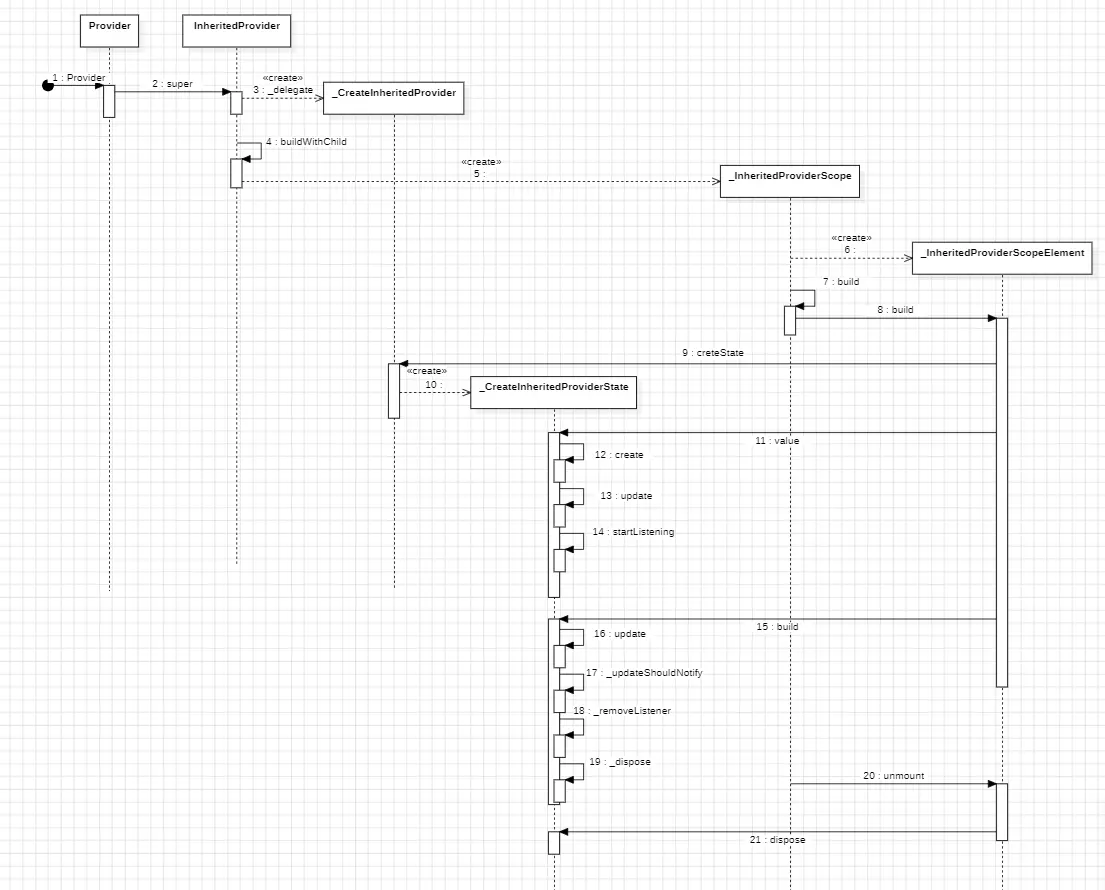
时序图如下:
主要逻辑发生在_InheritedProviderScopeElement中,然后触发_CreateInheritedProviderState进行更新。
首先就是获取依赖值value,只有获取值的时候才会调用create来创建值,即实现的懒加载场景,并且同时触发一次update。其次就是获取值的时候,如果没有加入监听,则会startListening来监听值的变化,当值变化时候回调函数会通知依赖的子组件刷新。 _InheritedProviderScopeElement#build的时候,如果是非懒加载情况,会直接访问一次value来触发创建依赖值。然后调用代理类的build,然后调用update一次,然后再根据_updateShouldNotify来决定是否通知依赖子组件进行更新,如果需要更新就移除监听removeListener并dispose。_InheritedProviderScopeElement#unmount的时候会触发dispose和removeListener。数据获取 数据获取方式有几种,基本上没啥太大的区别,主要就是是否需要进行依赖而已。
1
2
3
4
5
6
7
T watch<T>() {return Provider.of<T>(this );return Provider.of<T>(this , listen: false );
状态的获取有read和watch两种方式,他们都是定义的BuildContext的拓展方法,实际走的逻辑还是Provider中的of静态方法。
1
2
3
4
5
6
7
8
9
10
11
12
13
14
15
16
17
18
19
20
21
22
23
24
25
26
27
28
29
30
31
32
static T of<T>(BuildContext context, {bool listen = true }) {final inheritedElement = _inheritedElementOf<T>(context);if (listen) {final value = inheritedElement?.value;if (_isSoundMode) {if (value is ! T) {throw ProviderNullException(T, context.widget.runtimeType);return value;return value as T;static _InheritedProviderScopeElement<T?>? _inheritedElementOf<T>(final inheritedElement = context.getElementForInheritedWidgetOfExactType<as _InheritedProviderScopeElement<T?>?;if (inheritedElement == null && null is ! T) {throw ProviderNotFoundException(T, context.widget.runtimeType);return inheritedElement;
获取方式也是我们非常熟悉的方式,注意当我们使用Provider时,实际上会在子布局外包裹一层_InheritedProviderScope,实际的数据以及回调方法都是由它来提供的,因此我们获取数据时也是通过这个类型来获取的。对于普通获取,直接通过get方法拿到数据,对于依赖方式获取,通过dependOn方式拿到数据,在通过依赖方式获取状态时,会去将context所指向的element添加到依赖列表中,这样当_InheritedProviderScope发生变化时就能通知到我们进行重建。
还有一个有区别的方法就是select,它能够选择性能依赖某几个字段,当固定的字段发生变化时,才会触发重建:
1
2
3
4
5
6
7
8
9
10
11
12
13
14
15
16
17
18
19
20
21
22
23
24
25
26
27
28
R select<T, R>(R Function (T value) selector) {final inheritedElement = Provider._inheritedElementOf<T>(this );try {final value = inheritedElement?.value;final selected = selector(value);if (inheritedElement != null ) {return !const DeepCollectionEquality()else {return selected;finally {
select实际上是将变化的值进行筛选,或者说是做一下map的操作,将状态值转换成别的值并返回,后续也是当状态发生变化时,再进行转换,如果转换后的值不一致,则再去进行通知,从而可以避免其他状态值的影响。